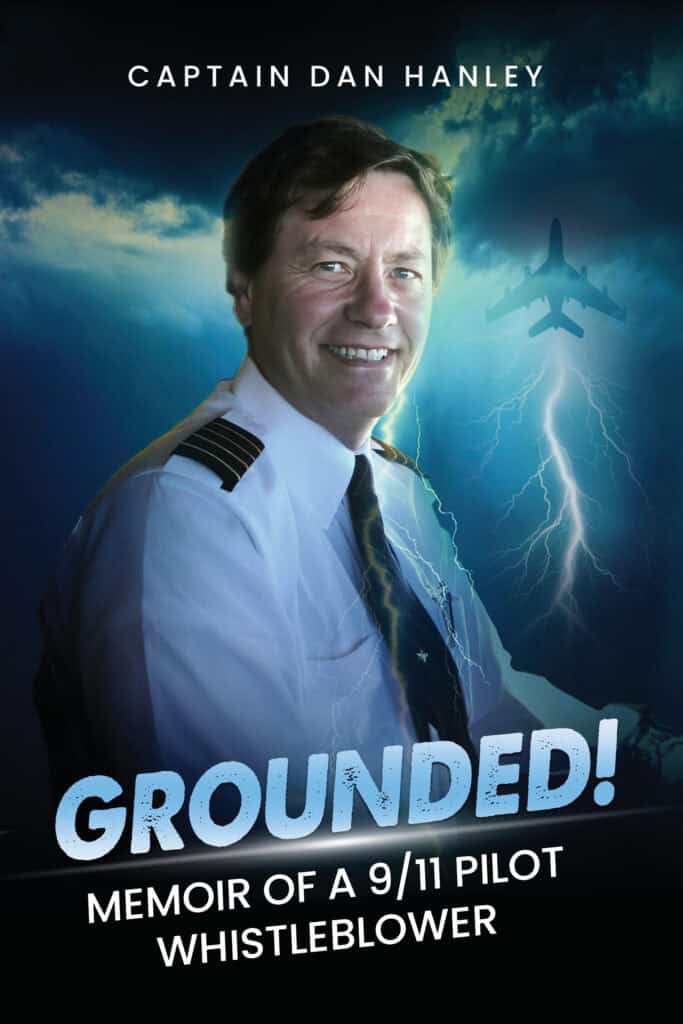
The following is about Dan's Memoir
Select information is included from the book to help understand the importance of this book and to encourage you to purchase and read it in full.
https://www.amazon.com/dp/B0FT4TKV31 Purchase Dan's best selling Memoir on Amazon
Use the above link to purchase this Amazon Best Seller important book about 9/11 and related issues. I’ve personally spent many hundreds of hours with the author reviewing his story and editing this book. This was no ordinary task. Once I got started, I realized how important this story about 9/11 really was. Purchase the Kindle version for only $1.99 during the introduction before the price goes up. The paperback version will be available soon. Please purchase, read, leave a 5-star review on Amazon, and share. — Thanks, Roger Due, Editor & Publisher
https://www.amazon.com/b?node=16571048011
Use the above link to download the Kindle app for iOS, Android, Mac, or PC to read the Kindle version on any of these devices. For Dan's book, the Kindle version uses full color photos, whereas the paperback uses grey scale to reduce the price, although the front & back covers are in color.


Dedication
To my dear beautiful children, Daniel and Christina, who were too young then to understand, may they one day comprehend what their father was attempting to expose, and to my gorgeous and supportive wife, Huma, who patiently tolerated my incessant drive to expose the crimes of 9/11, I dedicate this book.
After United Airlines illegally maneuvered to remove Dan from his position as a Captain and canceled his medical certificate in a way that he could never fly again, his marriage and relationship with his children fell apart.
A mutual friend in London introduced Dan and Huma and they communicated extensively via Skype without video. Dan realized that he had found a soul-mate in Huma, who is as beautiful on the inside as outside, and visited in Pakistan for her birthday in 2009. In 2010 they married in Huma’s Muslim faith and presently live in Islamabad.
Huma’s career at Pakistan TV World and DAWN TV as an English-speaking news anchor as well as researching and writing reports spans many years. Pakistan Television Corporation is the largest and only English speaking news station in Pakistan.
Roger Due, Editor & Publisher
I remember exactly where I was on 9/11/2001 when the Twin Towers were destroyed. I have a degree in physics and had worked with a lot of engineers in the Boston hi-tech sector. The narratives about what had happened and the official government story ignored a lot of unanswered questions.
During my research, I became aware of Dan Hanley’s website. After a detailed exchange on Twitter, we talked for over an hour via Skype, since he lived in Pakistan. I learned that he was writing a book about his life as a pilot in the Navy & with United Airlines and the fallout surrounding 9/11.
As an experienced pilot, asserting that the “Muslim hijackers” flew the 9/11 airplanes didn’t make sense. How could they have suddenly flown the advanced Boeing 767 twin-engine jets without adequate training when they barely passed flight lessons on a small single-engine Cessna?
I offered to work with Dan to edit and publish his book as ‘Amazon Best Seller’ Kindle & paperback versions. This turned out to be a much bigger endeavor than either of us anticipated, especially since we wanted the world-wide Muslim community to understand how they have been wronged because of 9/11.
While working with Dan, I’ve seen firsthand his tenacity and moral sense of honesty throughout his life. This Memoir is truly a “hero’s journey” that is an inspiration and continues to expose the truth for all to see.
Preface
Life is full of tough times and hard decisions. But as long as you choose to do the right thing, you’ll be OK. —Chelsea Sedoti
Life is a journey.
As a kid growing up in Illinois with six brothers and sisters and a poor academic record in high school, no one would have predicted that I would become Commander of a 4-engine P-3 Orion Naval plane with a crew of 12, nor that I would become Captain of the latest United Airlines Boeing 777 passenger jet. Nor would they have predicted that my moral standards would prohibit me from falsifying a flight report to satisfy United Airlines management.
As a result, United Airlines falsified charges against my pristine flying record to ground me from ever flying again. I became a whistleblower about faulty flight safety practices in the airline industry and the severely flawed official 9/11 government report.
I never sacrificed my morals, nor did I ever give up. My journey illustrates how a strong determination and hard work can overcome many obstacles faced in achieving one’s goal.
It also illustrates how facing these unexpected challenges has resulted in far more good for humanity than my original objective for becoming a Captain in the left-seat of a commercial airliner.
Captain Dan Hanley, Summer 2021
Prologue
Our prayers are answered not when we are given what we ask, but when we are challenged to be what we can be. —Morris Adler
On the Horns of a Dilemma…
Down the aisle of a United Airlines Boeing 777, past 250 seats, many filled with passengers, runs a small, frantic man screaming a blood-curdling message:
“There’s a bomb on the plane! We’re all going to diiiiie.”
Now, here you are. It’s morning at Heathrow Airport, you’re the captain of this airliner, you’re in the cockpit and in the midst of conducting your pre-flight safety check. Suddenly, the purser, your crew’s senior flight attendant in first class, buzzes you on the intercom to notify you of this disturbance.
“Half the passengers are afraid for their lives,” she told me. “They want to get off the plane.”
On these trans-Atlantic flights aboard the largest passenger jets in the world, it’s not so unusual to have passengers “act out” and engage in drunk and disorderly conduct. Your flight crew of 12-14 personnel are expertly trained in handling these situations, though at their worst, police intervention has to be called upon at times to resolve matters. But this incident… yes, this was a little over the top!
Place yourself in my shoes for just a moment. I’m Captain Dan Hanley, aged 50, at this point a commercial airline captain for ten years. I arrived at this moment, the pinnacle of my dream career, by working my way through a career in college, civil aviation training, enlisting in the military and achieving the rank of Navy Lieutenant Commander, then taking a leap of faith to achieve my life-long American Dream of being a commercial airline pilot, which had meant starting over “from the ground up” again in civil aviation and gradually advancing through the ranks to flying the largest of civilian airliners as a Captain — by now, having flown UAL passengers from New York to London about one hundred times.
Part of the long and arduous journey to my current position had involved steeping myself in the “CLR,” Command, Leadership, and Resource Management training, which emphasized the importance of coordination between the cockpit and flight attendants, and with all available external sources, such as maintenance and dispatch, in the event of a flight irregularity or emergency. Well, here we were, faced with an emergency. You don’t take a chance on whether or not you have a bomb on board the airliner, or simply a hysterical passenger engaging in a hallucination. (Are we agreed on that? Good.)
Because, according to a Federal regulation, emergency matters are to be dealt with as delegated under the principle of “Captain’s Authority.” This means, “The buck stops here,” with you, if you are the airline captain. As Captain, it is you who must exercise judgment and authority in the event of accident or emergency. These regulations expressly state that the Captain must have freedom to make operational decisions totally unimpeded by extraneous financial, legal, and political pressures.
I left the cockpit, only to discover a trembling male passenger in the jetway beyond the cockpit door. I questioned him about what he had seen, and where, but his stammered replies were semi-incoherent and not at all helpful.
To the purser, I said, “Get some paramedics and the UAL Heathrow head of security down here.”
“Captain,” a crew member rushed up to advise me, “people are grabbing their things from the overheads.”
I then addressed the passengers and crew via the public address system. “Passengers, we apologize for the inconvenience, but due to safety concerns, we’re going to delay departure until we can perform a thorough security check of the airline. In the interests of safety, please take your overhead baggage and deplane, row-by-row, with the assistance of the crew. Please, everyone stay calm and proceed in an orderly fashion as the quickest and safest way to leave the aircraft.”
Naturally, some of the passengers expressed gratitude toward me as they departed.
“Safety comes first at United Airlines,” I smiled and nodded to reassure them. I was speaking the company line, but at that moment, I still believed it.
Then, some of the crew approached me, as they escorted passengers off the plane, to say they were afraid for their lives, as well. According to regulations, they should not be made to make this flight, either, under the circumstances.
While the plane was still emptying of passengers, two flight attendant supervisors boarded the aircraft, tensely approached me and demanded to know which crew members were responsible for the delay in take-off.
“Hey, they’re just doing their jobs as my eyes and ears in the back,” I said. “We just had a bomb scare. What if we were out over the Atlantic and had to turn back over this?”
“Any delay is a costly delay,” one of them shot back.
“Well, we’ve got crew that are just as spooked as the passengers. They don’t want to make this flight now.”
The other manager pointed his finger in my face and said, “Which ones? Because we will give them a direct order to make this flight.”
“And if they won’t?” I asked.
“We’ll fire them!”
“You’ll fire them… for following the ‘CLR’ guidelines?”
“We sure will.”
I confess, I was stunned. As you’ll see in the following memoir, a lot had happened in the airline business before this incident opened my eyes to the current state of management in our evolving business. These were important, fundamental principles of life and death procedures which were being cast aside. I would have a lot to say about the incident when I would file my Captain’s Report on it later.
In any event, filing that report was the culmination of all the fateful decisions I had ever made, up to that moment in my life. The implications of its outcome reached to the very foundations of the current system we still refer to as “the American Way.” In this system, the value of human life is meaningless compared to corporate officers’ satisfaction that they are viewing the highest possible numbers on the bottom line of a quarterly earnings report. That, ultimately, is the reason I have decided to tell my story.
Fasten your safety belts, as they say, and make sure your trays are locked in the forward upright position. Here we go…

===============================
https://www.amazon.com/dp/B0FT4TKV31 Purchase Dan's best seller book on Amazon
Use the above link on Amazon to purchase this important book about 9/11 and related issues. I’ve personally spent many hundreds of hours with the author reviewing his story and editing this book. This was no ordinary task. Once I got started, I realized how important this story about 9/11 really was. Purchase the Kindle version for only $1.99 during the introduction before the price goes up. The paperback version will be available soon. Please purchase, read, leave a good review on Amazon, and share. — Thanks, Roger Due, Editor & Publisher
https://www.amazon.com/b?node=16571048011 Use this link to download the Kindle app for iOS, Android, Mac, or PC to read the Kindle version on any of these devices. For Dan's book, the Kindle version uses full color photos, whereas the paperback uses grey scale to reduce the price, although the front & back covers are in color.
===============================
11. September 10th and 11th, 2001: Twin Towers & Pentagon
Be bold in what you stand for, and careful in what you fall for.
Ruth Boorstin
Little did I realize on September 10th the drastic changes that were about to unfold in my career and personal life as a result of my integrity and honesty as a pilot.
On September 10, 2001, I arrived late at night in Newark International Airport from Denver. I stayed at the Newark Hilton, since I was scheduled to fly to London on the next evening. Thunderstorms in the area were causing many New York City area inbound flight delays. I had already flown many holding patterns and almost diverted to Philadelphia at one point. I was exhausted from all of the tension and delays when I got to the Hilton. After requesting a room service meal and watching the late-night news, I requested a late checkout from the hotel. I needed a good night’s sleep, to be prepared for an all-night flight to London the next evening. I posted the “Do Not Disturb” sign on my door and hit the sack early.
A little past 8AM the next morning I was rudely awakened by “Housekeeping!” banging very hard on my door. I was surprised and dumfounded that any hotel staff would interrupt a guest at that early hour, especially housekeepers who knew better! BANG! BANG! BANG! The woman outside my door kept knocking loudly on my door and yelling “Housekeeping!”. I was upset that my sleep had been interrupted and finally yelled, “I’m sleeping… go away!” Out in the hallway I could hear other housekeepers frantically banging on doors. Why? I didn’t care at that moment. As I dozed off again, little did I realize that two commercial jet airplanes had flown into the Twin Towers just several miles away. Housekeeping was attempting to vacate the hotel for others.
Around 11AM I finally got out of bed. I tried to use the room phone to call a family member, but couldn’t get an outside line. I got my cellphone from the charger in the bathroom, yet I kept getting a busy signal when trying to call. I had about 20 voice messages. The first one from a family member kept saying: “Oh Dan, it’s so awful. It’s so awful. Are you alright?”, without giving any clue as to what was so awful. The second message was similar. My blood froze in my veins. I was certain that a family member has been involved in a car accident, or some sort of emergency.
I frantically kept trying to call a family member and finally reached my older sister. She was frantic while sobbing, “Isn’t it terrible? Isn’t it awful?” I finally asked, “What are you talking about?” I pleaded with her to assure me that no family member had died. She was astonished that I was clueless. “You don’t know?” She finally told me that two commercial jet airplanes had struck the Twin Towers of the World Trade Center in Manhattan and that both had collapsed to the ground.
Dumbfounded, I stumbled to the window of my 17th floor room and tore the curtains open to view the New York City skyline. My stomach curdled in disbelief as I watched the huge volume of smoke billowing up from the south end of Manhattan where the Twin Towers once stood. My sister then told me that: “Another plane had struck the Pentagon. There’s a fourth one that’s crashed in a field in Pennsylvania!”
My stomach became even more ill when I realized that two of the airplanes belonged to American and two to United Airlines. Later I learned that American Airlines flight 11 crashed into the North Tower. United Airlines flight 175 crashed into the South Tower. American Airlines flight 77 crashed into the Pentagon. United Airlines flight 93 crashed in a Pennsylvania field.

9/11 disintegrating buildings
Like so many others, I believed that America was now under attack. I was even afraid that the entire New York City area would be leveled by a nuclear blast at any moment. My sister said that all flights had been grounded. The New Jersey Turnpike looked like a giant parking lot. I called the front desk to see if under the circumstances that I could keep my room for another day. They asked me to vacate the room as soon as possible, since it had already been booked by another guest.
I began shaving while watching the TV. My mind was racing while trying to decide where to go and what to do. Mayor Rudy Giuliani was describing how he had seen people jumping from the upper floors of the Twin Towers, even before they collapsed.
I learned from the news that the United Airlines airplane that crashed in Pennsylvania had originated from Newark. I decided to try going to the Newark airport to help staff in any way possible.

United 93 crash site in Pennsylvania
The hotel lobby was packed with people watching the news unfold on the TV in the bar. The front desk confirmed that the hotel van was still operating. I rushed out the door to catch a departing van. I was the only passenger trying to get to an airport. The female driver turned to me and said, “Honey, we’re not going to get anywhere near that airport. The roads have all been blocked.” I told her that I still wanted to give it a shot since I felt that I could be of assistance to United Airlines. Off we went as she agreed to do her best. The sky was crystal clear, yet I kept looking at the billowing smoke rising from where the Twin Towers once stood. That horrible image was difficult to believe.
Our progress came to a stop at the entrance ramp to Newark Airport. The road was blocked by snow removal equipment and armed soldiers. I grabbed my pilot uniform and airline photo ID and informed the soldiers that I had come to assist. We were waved through to the airport without any further questioning.

9/11 dustified buildings that ascended into the sky
I noticed a small group of female United Airlines ticket agents huddled together and crying. As I approached them, several news camera crews ran towards us, hoping for an interview. I ran them off by aggressively waving my arms and shouting, “We do not wish to make any statements!”
The airport looked like a ghost town. Except for those critical to the accident response, all passengers and employees had been evacuated from the airport. Armed military stopped me at the entrance to the United Airlines concourse. A maintenance manager I knew vouched for me with security. I was then waved through to flight operations.
By now only a handful of pilots remained in flight operations. The FBI was questioning pilots who had taxied out earlier and actually saw the airplanes hit the Twin Towers. We were briefed that the crash response team was on their way from upper New England, but they were tied up in traffic on the freeway.

South tower explosion; United 175, S Tower; AA 11, N Tower
We learned that after an airplane accident, many next-of-kin would congregate at the departure airport to seek information about family members and friends. We were asked to stay and offer condolences and support for this terrible situation.
All afternoon we sat glued to the TV in the maintenance area adjacent to flight operations. After 6PM when no next-of-kin showed up, the FBI released us and we were free to go. They had arranged for hotel rooms for those of us needing a place to stay.
I decided that I would somehow find a way back to Atlanta, even though all flights were grounded nationwide. I headed to the front door of the abandoned terminal, since renting a car to drive to Atlanta was my first thought.
The concourse is usually buzzing with people checking in or arriving. It was an eerie feeling to be walking alone through the empty concourse to the vacant entrance and out the front door. The streets were empty. A lonely Port Authority police officer approached and asked me what I was doing there. I explained that I needed a taxi to drive me to a rental car facility. Lo and behold, a cab pulled right up to the curb.
Hopping inside the cab, I instructed the driver to take me to any rental car company nearby. He told me that all of them had been closed by some higher authority. I still wanted to try. After visiting Avis and Hertz, it became obvious that he was correct. He then suggested driving to the Union Station in downtown Newark where I could catch a train. I agreed.
He drove in bumper-to-bumper traffic for more than an hour. We finally arrived a few blocks from the train station where the traffic was gridlocked. The driver suggested that it would be faster if I walked the rest of the way. I paid him $50 and hurried down the busy street to the station.
There was massive rush-hour chaos in the train station. People were rushing to catch their trains. After twenty minutes in line, I explained to the female ticket agent that I needed a one-way ticket to Atlanta. My heart sank when she told me that the last train to Atlanta had just departed. Now what do I do? I then requested a ticket as far south of New York City as possible towards Atlanta. I was fearful about what disaster might happen next in the New Your City area. I just wanted to get out of town fast! I purchased a ticket to Charleston, South Carolina, that was leaving in five minutes and had to hurry. I ran as fast as I could to the train and just barely made it.
I was sitting in a seat on the right side as the train pulled out. I saw a beautiful heavenly sunset on that crystal clear evening when I looked West on the right. But when I looked left to the East, I saw the hellish scene of the huge smoke columns rising skyward on the south end of Manhattan where the Twin Towers once stood. This was a uniquely somber moment for me. It was as though I was between heaven on one side and hell on the other.
The train ride was long. Between Newark and Washington D.C., the train stopped several times for half an hour. They explained that railroad bridges were being inspected to ensure that we could pass safely.
A conductor asked for my ticket as we approached Washington D.C. and asked why I was going to Charleston. I explained that I really wanted to go to Atlanta, but had missed the train. He pulled out his radio and began chatting with the train engineer up front. After a brief conversation, he said, “Grab your suitcase and follow me.” I did, although I was uncertain about what was happening.
As I was following him, he turned and quietly informed me that the engineer had called ahead to the Atlanta-bound train. As a result, the Atlanta train was going to stop and wait for me at Crystal City in D.C., just so I could board! I was astounded and told him that this was not at all necessary, but he ignored me.
A golf cart was waiting for me at the bottom of the train stairs in the dark. As we drove forward past the engine, I saw the train engineer waving at me. I stood up to salute him and hollered, “YOU ARE MY HERO!!”
I arrived in Atlanta eighteen hours after leaving Newark. Mission accomplished. I reflected on how wonderful it was that everyone in the country was working as a team to help one another in any way possible.
After a disaster of this magnitude, it was clear to me that the various safety loopholes I had previously witnessed among colluding insiders, managers, union officials and Federal enforcers should never again be tolerated.
This renewed “Americans united” spirit gave me hope that something positive could evolve out of this tragedy. All of us could surely now work together to implement better airline safety solutions that would benefit everyone.
My hope was shattered over the coming years. I again had to realize that the Americans who could come together to implement better airline safety solutions were not willing to do so. They were about to engage in an authoritarian-enforced charade which was not safer for any of us.
===============================
https://www.amazon.com/dp/B0FT4TKV31 Purchase Dan's best seller book on Amazon
Use the above link on Amazon to purchase this important book about 9/11 and related issues. I’ve personally spent many hundreds of hours with the author reviewing his story and editing this book. This was no ordinary task. Once I got started, I realized how important this story about 9/11 really was. Purchase the Kindle version for only $1.99 during the introduction before the price goes up. The paperback version will be available soon. Please purchase, read, leave a good review on Amazon, and share. — Thanks, Roger Due, Editor & Publisher
https://www.amazon.com/b?node=16571048011 Use this link to download the Kindle app for iOS, Android, Mac, or PC to read the Kindle version on any of these devices. For Dan's book, the Kindle version uses full color photos, whereas the paperback uses grey scale to reduce the price, although the front & back covers are in color.
===============================
Transcript of Interview with Mark H. Gaffney by Captain Dan Hanley on 3-5-2022 (from Appendix)
This interview references the article that was also written by Mark Gaffney: “How the FBI and 9/11 Commission Suppressed Key Evidence about Hani Hanjour, alleged hijack pilot of AAL 77”.
Dan Hanley: Hello, my name is Captain Dan Hanley. I currently serve as director and international public spokesperson for a global grassroots effort called 9/11 Pilot Whistleblowers, whose website is at 911Pilots.org and YouTube channel at 911Pilots if you'd like additional information on it.
But basically, the purpose of our organization is to show that there were no Muslim hijackers at the controls of the 9/11/2001 aircraft, but that the aircraft were electronically hijacked through employment of a system called the Uninterruptible Autopilot that enables a remote source to take complete control of the aircraft's autopilot and flight management computers and fly the aircraft to its designated target.
Now once this system is engaged, the pilots can no longer disconnect it. And if you disbelieve that a large commercial jet aircraft could be electronic hijacked, I suggest you go to that website at 911Pilots.org and go to the “Remote Control” page on the drop-down Menu, and you will see that it is entirely possible for them to be remotely controlled.
So today I have with me Mark Gaffney. He lives in Chiloquin, Oregon. He's the author of several books. Two of them, well, three actually, if you consider the second edition of the book, but three books on 9/11. The first book that he wrote was in 2008, and it was called the “9/11 Mystery Plane: And the Vanishing of America” with another 9/11 truther, David Ray Griffin.
And that's about the E4B that was seen circling over Washington D.C. on 9/11. I'll let Mark talk about that if he'd like to. And the second book he wrote was in 2012, and it's called “Black 9/11: Money, Motive, and Technology”. And the third was the second edition to that book, and it's called “Black 9/11: How Cutting-Edge Technology Was Used Against the American People on September 11, 2001”.
So, I'm embarrassed to admit, Mark, I didn't read your books, but they both sound very, they all sound very interesting. Mark, thanks for doing this interview, and maybe you'd like to tell people a little bit more about yourself, how you got into the Truth Movement and became an author.
Mark Gaffney: Thank you, Dan. Glad to be with you.
Let me just say up front that I'm very pleased that somebody is picking up this issue, even if it is late in the game, you know, and running with it, because there is no statute of limitations for murder, and that's what we have here. We have mass murder of Americans to further a foreign policy agenda, in my opinion, so I'm glad you're doing this, what you're doing.
So, I got into this in 2006. I was late coming to the issue. Somebody passed me a copy of David Ray Griffin's book, “The New Pearl Harbor: Disturbing Questions about the Bush Administration and 9/11”, and you know, that got me asking questions and then when I heard about this, I was contacted by a researcher who had been looking into these E4Bs flying over Washington during the attacks and he got into the archives of one of the networks. I'm trying to remember if it was CNN. I think it was CNN and he actually got the footage that had been stored there, somehow. I got access to it and he shared that with me and that really got me started on the first book.
And then I found out so much, I couldn't include it all in one book, so I did a second book, a follow-up book, “Black 9/11” and investigated some of these other related issues and that included Hani Hanjour, who supposedly we are told, flew flight 77 into the Pentagon. Now I had access to the 9/11 radar data because a colleague, John Farmer, acquired the 9/11 raid's radar data from the government through a Freedom of Information Act request and made that available to me.
So that was extremely helpful in piecing together the story that I, that I learned, you know, what I found out, and we had flight 77. I just want to say up front here, I try to avoid the Pentagon strike because it's so, you know, divisive, but we had flight 77 on radar the entire time from Dulles until it hit the Pentagon.
So, in the photographs of the Pentagon, unfortunately the ones that show the big hole in the side of the building never got much attention. All we saw was this photograph of a little tiny hole and people thought it was a missile hole, but there was a big area that got hit and definitely large enough, you know, to accommodate a flight, a Boeing 757.
So, I have no doubt about that. I just want to say that and get that out of the way. But anyway, the Hani Hanjour issue is vital. I don't question that 77 hit the Pentagon, but Hani Hanjour was not able to fly that plane. The research I did, still no one has refuted. It's still valid today. The research I did back then.
Dan Hanley: Oh, I'd like to just mention, because a lot of people may not be familiar with who specifically Hani Hanjour was. He was a 29-year-old Saudi Arabian who came to the States in the 90s to train and went back to Saudi Arabia and then returned before 9/11 to try to continue his training.
But basically, as Mark mentioned, he took off from Washington Dulles Airport heading west and got to cruising altitude, made a U-turn, a 180 degree turn back into Washington D.C., and started his descent. At around 7,000 feet, he commenced his 330-degree descending, accelerating, corkscrew turn to arrive precisely at the surface without skidding on the surface at 500 knots to strike the Office of Naval Intelligence on his first try.
Now we're going to get into Hani Hanjour's experience, or lack thereof. Now this very experiment, there's another grassroots organization called “Pilots for 9/11 Truth”. They rented some simulator time and put highly experienced pilots in the seat. And when they tried to accomplish this maneuver, they crashed the simulator and yet we're led to believe by the “9/11 Commission” that this novice pilot was able to accomplish it on his first attempt.
Mark did a research article. Correct me if I'm wrong, Mark, but this July 2008 Global Research article was actually a chapter from your book. Is that correct? (Correction: The Global Research article was published 7/7/2009 and is also included in this Appendix.)
Mark Gaffney: That became a chapter in the 2009 edition.
Dan Hanley: Oh, okay. I got it backwards then. Okay. Anyhow. Right. Okay. I don't know how I stumbled across it, but it was a real eye opener for me when I read the information contained therein.
And it's so important that we, on our 911Pilots.org website, we've placed it in two locations. If you go to the top of the page, there's a tab called “Articles” and you click on that and you drop down and it'll say “Gaffney”. Just go to that. We've got it where you can download it or print a copy of it. But it's about an eight-page article and well worth reading. And the other place we put it was on the “Hijackers” page on the drop-down menu there. But the title is very descriptive and revealing on what we're going to be talking about here. And that is, quote, “How the FBI and the 9/11 Commission Suppressed Key Evidence About Hani Hanjour, the Alleged Hijacker of American 77”.
Now you say in the article in August 2004, the 9/11 Commission had completed its work and they transferred records to the National Archives and it was kept there under lock and key for four and a half years. Then in 2007, a small fraction of these documents were released and the article is basically all about the information that was released about Hani Hanjour in that year. So, it basically says he was a perpetual novice. Now I know we're going back years on you here Mark and I don't know how much you recall about his training, but you said in the article that he was a perpetual novice and he dropped out of his first school at Sierra Academy of Aeronautics just after attending only a few classes and then he enrolled in Cockpit Resource Management, which is a flight school in Scottsdale, Arizona, and his performance was described as being less than adequate and the owner of the school described Hanjour as a weak student who is wasting our resources.
Those were quotes. So, we've got the page that I mentioned to you on “Hijackers” on our website. I just want to read some notes to you about that. He was quoted in major mainstream news outlets. But Hani Hanjour trained mainly in light prop airplanes, like a single engine Cessna. He had never flown a jet aircraft in his life in flight to the best of our knowledge.
In January 2001, the Arizona flight tech school managers reported him to the FAA at least five times because his English was inadequate for a commercial license. It took him five hours to complete an oral exam. In the last two hours Peggy Chevette, a manager at the school, said he failed English classes with a .26-grade-point average. The Jet Tech manager said he could not fly at all. That was a quote.
Now, according to the 9/11 Commission, Honjour began his training in earnest. But in reality, while in Cockpit Resource Management, he rarely finished his coursework required to get a certificate to be able to fly even a single engine aircraft. I've got three newspaper articles here and one TV report.
The New York Times reported that, quote, “he was a lackadaisical student who often cut classes and never displayed a passion so common among budding commercial airline pilots.” ABC News reported that when he returned to Cockpit Resource Management, quote, “he was trying for his pilot's license, but according to one of his instructors, he was a very poor student who skipped homework and missed classes.”
The school's attorney said that when Hanjour reapplied again later in 2000, when he returned from Saudi Arabia, “we declined to provide him training because we didn't think he was a good enough student when he was there in 96 and 97.” The school's owner described him as a “weak student,” and he said “one of the first accomplishments of someone in a flight school was to be able to fly an airplane without an instructor.”
And finally, the Chicago Tribune reported that while he was at Cockpit Resource Management, quote “an instructor was left with the impression that Hanjour was unimpressive. He was making weak progress.” So, all in all, you see there from multiple reports that he was a very poor student and apparently had some learning disabilities.
All of this was reported in the mainstream media and was out there. But none of it made it into the 9/11 Commission Final Report and we'll see why here in a bit. But Peggy Chivette, as we mentioned before, she mentioned on Fox News, quote, “I couldn't believe that he had a license of any kind with the skills that he had.”
Now Mark, maybe you could expound on this, but he did in fact have some simulator time in a 737.
Mark Gaffney: Well, yes, and actually you're the pilot, though I should be asking you, would a simulator time in a 737 qualify somebody to fly a 757?
Dan Hanley: Not at those speeds in a 757. To the best of our knowledge, they had never seen the inside of a Boeing 757 or 767 aircraft. The 757 was the American 77 that hit the Pentagon. It's absurd to believe that this pilot could have flown this aircraft. And what we do on our website, we do a photo analysis of the Cessna 172, it's on the “Aircraft” page, which was their primary training aircraft, compared with that of a 757.
You see the vast differences. You're talking about a one-ton airplane compared to a hundred-ton airplane, one that does a hundred knots compared to one that supposedly did 500 knots, which is questionable that it could achieve that speed. An airplane that's 27-feet-long compared to a 160-foot-long airplane.
And it's absurd when you look at the cockpit differences between a Cessna 172 and a Boeing 757, with the vast differences in the instrumentation and the wealth of information that is available on the various screens with computer displays, etc. on the 757 aircraft. So, the fact that he had 737 simulator experience, and that's a big question that I haven't been able to research it, whether it was in a 737 200, which was your older cockpit airplane, or a 737 300 or above that had the glass cockpit.
But at any rate, no flight time in any jet aircraft. His instructor that trained him on the simulator said he, Hanjour, will need much more experience flying small aircraft before he's ready to master a large jet. So, all of this was not mentioned in the final 9/11 Commission Report. Pan Am dissolved Jet Tech after 9/11. They owned it, okay?
But a former employee who knew Honjour expressed amazement that he, Honjour, could have flown into the Pentagon because he could not fly at all. Now, Mark, are you familiar with the scouting flights in 2001, just five months before 9/11 that Hanjour wanted to do up in New Jersey?
Mark Gaffney: I am more familiar. I know he did the flight up there in New Jersey, but I spent more time investigating his visit to Freeway Airport, which was in August, just before the attacks.
Dan Hanley: Right. That was just one.
Mark Gaffney: I actually contacted the manager there, Marcel Bernard, and he confirmed to me that the, you know, the story I had read in the paper about how Hanjour had flunked was accurate. One of his pilots, two of his pilots actually, flew with Hanjour and I talked with one of them, Ben Conner.
I looked him up also and he also confirmed that Hanjour could not fly and they recommend, when he got back, he recommended to his boss, Marcel Bernard, that they not rent him a plane. This is the same pattern that happened in New Jersey that was repeated again in Maryland, just outside of the Washington area.
Dan Hanley: Right. In New Jersey, just four months before going back, just for a minute, Hanjour rented a plane. But he had an instructor with him, and he wanted to do a Hudson tour, they claimed, okay? But the next day, when Hanjour came back, he wanted to rent an airplane again, the instructor wouldn't allow it because of Hanjour's poor piloting skills.
But the very incident you're talking about, Mark, was exactly one month prior to 9/11. He shows up at the Freeway Airport to rent an airplane. Now, when you're a pilot, you show up out of the clear blue in an airport, they want to do an evaluation flight to make sure you're capable of flying. And that's what Hani Hanjour did on three flights on two days he went up with these instructors that Mark mentioned.
Sherry Baxter and Ben Conner both came back independently and told Marcel Bernard, the chief flight instructor, he can't fly, don't rent him an airplane. And I personally spoke with Marcel Bernard last month and he really didn't want to talk about it. He said it was past history and it wasn't going to go anywhere and he was really tight lipped about it, but he did acknowledge that they did come to him and talk to him.
I thought he was the one that had flown with him, but he told me that he didn't fly with him. He just refused the airplane. Now we're going to talk about why did the 9/11 Commission ignore all these open-source accounts of what happened, okay? Collaboratively, these indicate that Hanjour would have been lost in the cockpit of 757 and was barely able to qualify on a single engine Cessna.
We're going to find out here, because another important point is the 9/11 Commission fails to report the negative evaluation of Hanjour by the Jet Tech flight instructor. But, anyhow.
Mark Gaffney: Yes, and these pilots and instructors at Freeway Airport, Ben Conner and what was her name, Baxter?
Dan Hanley: Sherry Baxter, right.
Mark Gaffney: Yes, yeah, they both expected to be interviewed by the 9/11 Commission. They should have been interviewed. Neither one was and they were surprised. But this pattern you see over and over again, you know. All these different experts or people who met Hani Hanjour had the same impression.
And in fact, if you just look, consider the guy's motivation. He never even wanted to be a pilot, according to one source. He was going to be happy if he could just be a flight attendant. Supposedly, his brother persuaded him to, you know, aim higher, and the people that knew Hani said that he wasn't very motivated, you know. He was, like you said, a lackadaisical guy, kind of a happy go lucky guy who really didn't take life that seriously.
He wasn't very smart. He just wasn't that intelligent or capable.
Dan Hanley: Yeah.
Mark Gaffney: So, we met him… (conversation breaking up) They all said he does not have what it takes to be a pilot. You know, he just didn't have it.
Dan Hanley: Right. Well, the FBI file that you mentioned in the article, says that there's not one scintilla of evidence that Hanjour ever trained in the 757, and it also failed to mention Jet Tech, as we mentioned before.
But it grossly mischaracterizes what happened at the Freeway Airport in that it says that Hanjour received instruction from Serry Baxter and Ben Conner and that isn't true. It was just an evaluation flight. And there were no lessons given. So, we can see that the FBI failed to accurately report any of this information to the 9/11 Commission.
So, it's a total suppression of valuable evidence by the FBI and the 9/11 Commission. And this is curious to note that in August 2001, he actually failed a written test for his driver's license at the Virginia Division of Motor Vehicles. So, Mark, we have talked about Hanjour now. And we talked about Marcel Bernard and the two flight instructors.
So why don't you share with everybody who was Eddie Shalev? Three days later, where did Hani Hanjour go? And what happened, if you're familiar with Eddie Shalev?
Mark Gaffney: Yes. Well, Eddie Shalev was the one source that the 9/11 Commission, you know, regarded as valid and all these other reports that were never even mentioned were dropped. Because Eddie Shalev was the one instructor who stated that Hanjour could fly, that he was a decent pilot, you know, that he would have been able to do what the 9/11 Commission claims that he did.
So, the question is who is this guy, Eddie Shalev? Well, he's a mystery man because he basically dropped out of sight. He was working at a Gaithersburg, Maryland, company, Congressional Air Charters, very briefly though, only for about a month before 9/11 and then shortly after he disappears.
And this Congressional Air Charters, you know, was also the outfit that ceased to exist shortly after 9/11. So, many questions arise over this. Was this just a front set up for the specific purpose of creating a false story, a false narrative, so that whoever was going to investigate later would have a shred of evidence indicating that Hani Hanjour could indeed fly when we know that he couldn't?
Dan Hanley: Right.
Mark Gaffney: Apparently the 9/11 Commission bought that lone witness supporting Hani Hanjour and threw out all that other evidence is, you know, overwhelming amount of evidence. So, it's just, that's why I can't remember all the details over these years because there's so much of it.
Dan Hanley: Right.
Mark Gaffney: So many people testified that Hanjour couldn't fly and yet the 9/11 Commission ignored all of that. And they went with Eddie Shalev's testimony that he was a pilot that could fly. So, the question is, who is this Eddie Shalev? And we never did locate this guy. He dropped out of sight and we believe that he ended up back in Israel because Eddie Shalev was a member of the IDF, the Israeli Defense Forces, and for, you know, we don't know, nobody really knows, you know nobody can answer the question, the key questions because nobody has ever been able to get a hold of this guy.
Dan Hanley: Yeah.
Mark Gaffney: So, then we were left with a loose end there and all these unanswered questions because this guy disappeared.
Dan Hanley: So, in a nutshell, you've got Hanjour denied rental from the Freeway Airport after flying with two instructors.
Okay. So, three days later, he goes down to Congressional Air Charter, asked to rent an airplane, goes up with his instructor, an Israeli, who we don't know anything about, who came back and said, Hani Hanjour was a good pilot. There was a 9/11 Commission staffer, let me, I got his name here. His name was Quinn John Tam.
He interviewed Shalev and Shalev said that he was a good pilot. He also interviewed Conner and Baxter, so he had both sides of the story, and yet he ignored three qualified instructor pilots who said he couldn't fly an airplane, and chose the testimony of this Israeli that we know nothing about, that the 9/11 Commission didn't vet, and this appeared as a footnote, an end note, in the 9/11 Commission Final Report. So, they are entitled.
Mark Gaffney: That's right, in 9/11 his name only appeared one time in a footnote.
Dan Hanley: It's amazing.
Mark Gaffney: That's all the information they gave us.
Dan Hanley: And that was so hyper critical, because all this information shows that Hani Hanjour was not a good airplane pilot and couldn't fly an airplane at all. Never mind a 757 performing that incredible maneuver at that speed. So read this article. Mark, you wanted to talk about United 93, which we really don't cover on our website, but you said you'd like to mention something about it.
Mark Gaffney: Yes, and let me, just before we go there, let me just mention another detail.
Dan Hanley: Oh, okay.
Mark Gaffney: That's really important about Congressional Air Charters where Eddie Shalev worked in Gaithersburg, Maryland. There was another airport there where he worked. It turned out that I found out that the man who ran this actually, this was thanks to Chris Bollyn, he found this out, that the Congressional Air Charters was actually run by a guy with a criminal record.
His name is Monty Lilly and he'd been convicted of let's see, he had a criminal background, a convicted felon. I'm not sure about the details of his crime. He had been sentenced to 30 months in prison, however, and ordered to pay $33 million in restitution. Oh, after embezzling. This guy was an embezzler.
And he was running Congressional Air Charters. So, it really raises a lot of questions about what, you know, what is this, what was going on here? Because it's common for intelligence agencies to work with these kinds of guys, you know.
Dan Hanley: Right.
Mark Gaffney: Criminals, drug dealers, and so on. People with shady pasts end up, a lot of times, you know, working with the CIA or others as cutouts or other intelligence agencies like the Mossad, for example.
Dan Hanley: Right.
Mark Gaffney: So, this was another detail that you know, that raises questions.
Dan Hanley: So that’s, that.
Mark Gaffney: Let's talk about Flight 93.
Dan Hanley: Okay. Sure. Let me just say one thing Mark. 9/11 Pilot Whistleblowers, the basic statements we're making is the hijackers couldn't have flown, and there's a system called the uninterruptible autopilot that could have flown the profile. So, we really just cover the two planes that hit the Trade Center and the Pentagon and the Profile and don't get in get into whether a missile hit the Pentagon or whether there was really an airplane to hit the Twin Towers or whatever, but we don't even address flight 93. But go ahead Mark. I didn't mean to interrupt you there.
Mark Gaffney: Well, I mean I think that's a smart approach to just stay very focused on the issues that you want to concentrate on.
Dan Hanley: Right.
Mark Gaffney: But the reason I wanted to talk about flight 93 is because we have new information that I think actually supports the remote access and remote-control theory.
So, it fits very consistent with it. I learned about this last September 11th at a September 11th event, let me put it that way, in Oakland. They have an annual conference down there. I went down last September for it and Ken Jenkins gave a presentation about flight 93. He's a 9/11 researcher.
He's been working, you know, he's been working on the issue for many years. I've known him for quite a while. He gave a presentation about Flight 93 that impressed me very much because he had new information. He presented an animation based on the flight 93's flight data recorder, which was recovered on site there near Shanksville.
That was very persuasive and this was new information for me. The information in that flight data recorder and the voice, what's the name of that, the voice?
Dan Hanley: Voice recorder.
Mark Gaffney: Yes, the voice recorder indicated that it may very well be that the hijackers were on that plane and flying that plane and that a revolt did occur among the passengers who apparently tried to break into the cockpit. At that moment, that is when, you know, the plane does these weird, all this jumping around in the sky. It actually goes, was flying upside down just before the crash and then went straight down into the ground. Now, that kind of a trajectory could explain the debris field.
That's the one trajectory that could account for what was, you know, the absence of debris and so on. And the reason that I think it's important and I think that this actually renders my chapter on flight 93 a little bit dated at this point, because if those hijackers were on that plane flying it, I mean, it confirms what we're saying about these Arab hijackers as being incompetent pilots, because these guys were wandering all around the Pennsylvania countryside. They couldn't hit the broadside of a barn.
They would have been lucky to actually find the Washington, D.C. area, let alone hit anything.
Dan Hanley: Right, exactly.
Mark Gaffney: This indirectly supports the remote-control theory, because what I believe happened is that three of the four planes were flown with remote control, and for some reason, flight 93, something happened, something went wrong, they were not able to actually get control over that flight controller.
So, if they had gotten control, then they would have locked out those hijackers, and they would have uploaded a different flight plan, and would have flown that plane remotely to wherever they wanted to, you know, target what they wanted to hit. That's apparently, in my opinion, what happened to the other three planes.
And if the alleged hijackers were actually on those other three planes, they got locked out. They were, the hijackers were jacked and those guys did not have control. They lost control and they were victims just like the passengers and the crew.
Dan Hanley: Exactly.
Mark Gaffney: That's my view of it.
Dan Hanley: Exactly. And for people that want additional information on the research and development that went into this uninterruptible autopilot in the 1990s, prior to 9/11, I just interviewed Aiden Monaghan. who's also a researcher that did a lot of Freedom of Information Act work to get the information he needed to write a book whose title escapes me right now. (Declassifying 9/11: A Between the Lines and Behind the Scenes Look at the September 11 Attacks, by Aidan Monaghan)
We have the article that he wrote under the “Articles” tab of our website. Go to the “Videos” tab under “Monaghan” and you can listen to a one-hour interview I did with Aiden last week on this very topic. It's very revealing that the system was developed before 9/11 and it does exist. We allege that it was used on 9/11, because the navigation system on today's modern commercial jet aircraft is derived from cruise missile technology that's extremely accurate. And yes, within a few meters, it could hit the targets it did and it's amazing that all three airplanes, American 11 in the North Tower, United 175 in the South Tower and American 77 in the Pentagon on their first attempt with these rookies supposedly at the control wheel were able to precisely strike the target the way they did.
It just didn't happen that way. Please go to our website and read it. But Mark, do you have any other comments you want to make before we sign off here?
Mark Gaffney: No, I just want to mention briefly that Aiden Monaghan actually edited a section of my book where he presents his GPS research that he did about highways in the sky.
Dan Hanley: Yeah. How's that?
Mark Gaffney: And I detail my own research on the remote control in a separate chapter. So actually, the book presents two possible means of remote control that they could have been used on 9/11.
Dan Hanley: Very good. From my end we encourage you to go at our website, 911Pilots.org, and read these articles by these two gentlemen that are very revealing. Also, you might go to our YouTube channel at 911Pilots where we have about 45 videos. A lot of them are interviews that we've done. So, if you don't have anything else Mark, thanks again for joining me on this interview and sharing your information with us and, and for all the work that you’ve done.
Mark Gaffney: We wish you well and keep up the good work, Dan.
Dan Hanley: Oh, thank you, Mark. Thank you so much. Me from Islamabad, Pakistan and Mark Gaffney from Chiloquin, Oregon. I believe I pronounced that correctly. That's it. Thanks so much. Thanks for joining us and we'll see you next time. Bye.
===============================
https://www.amazon.com/dp/B0FT4TKV31 Purchase Dan's best seller book on Amazon
Use the above link on Amazon to purchase this important book about 9/11 and related issues. I’ve personally spent many hundreds of hours with the author reviewing his story and editing this book. This was no ordinary task. Once I got started, I realized how important this story about 9/11 really was. Purchase the Kindle version for only $1.99 during the introduction before the price goes up. The paperback version will be available soon. Please purchase, read, leave a good review on Amazon, and share. — Thanks, Roger Due, Editor & Publisher
https://www.amazon.com/b?node=16571048011 Use this link to download the Kindle app for iOS, Android, Mac, or PC to read the Kindle version on any of these devices. For Dan's book, the Kindle version uses full color photos, whereas the paperback uses grey scale to reduce the price, although the front & back covers are in color.
===============================